The Old Tool That Still Gets Results
When you think about drain unblocking, you probably imagine a van full of high pressure water jetting gear or a CCTV drain survey truck. Those are essential tools, no doubt. But there is a quieter, more tactile method that experienced drainage engineers reach for every day: professional drain rodding. It is not flashy, it does not make a lot of noise, and it has been around for decades. Yet for certain kinds of blockages, nothing else works as well or as safely.
I have spent years working on drainage systems across Essex, London, and the M25 corridor. I have seen the full spectrum of blockages, from a simple kitchen sink blockage that a bit of boiling water could fix, to a full sewer collapse that required excavation. And through all of that, I have learned that professional drain rodding is not a relic of the past. It is a precise, controlled technique that every drainage company should have in its toolkit.
What Professional Drain Rodding Actually Means
Drain rods are lengths of rigid but flexible material, usually polypropylene or similar, that screw together to form a long, sturdy pole. A skilled engineer attaches a rubber disc, a corkscrew, or a scraper to the end, then feeds the rod into the drain by hand. The rod is pushed and turned, gradually working through the pipe until it meets the blockage. Then, with careful pressure and rotation, the engineer breaks up the obstruction or pulls it back out.
This is not the same as using a drain snake, which is a coiled metal cable that spins inside the pipe. A drain snake is good for tough, fibrous clogs, but it can also damage older pipes if used aggressively. Professional drain rodding, by contrast, relies on feel. You can sense the texture of the blockage through the rod: is it soft and mushy, hard and crusty, or tangled with roots? That feedback lets you choose the right attachment and the right amount of force.
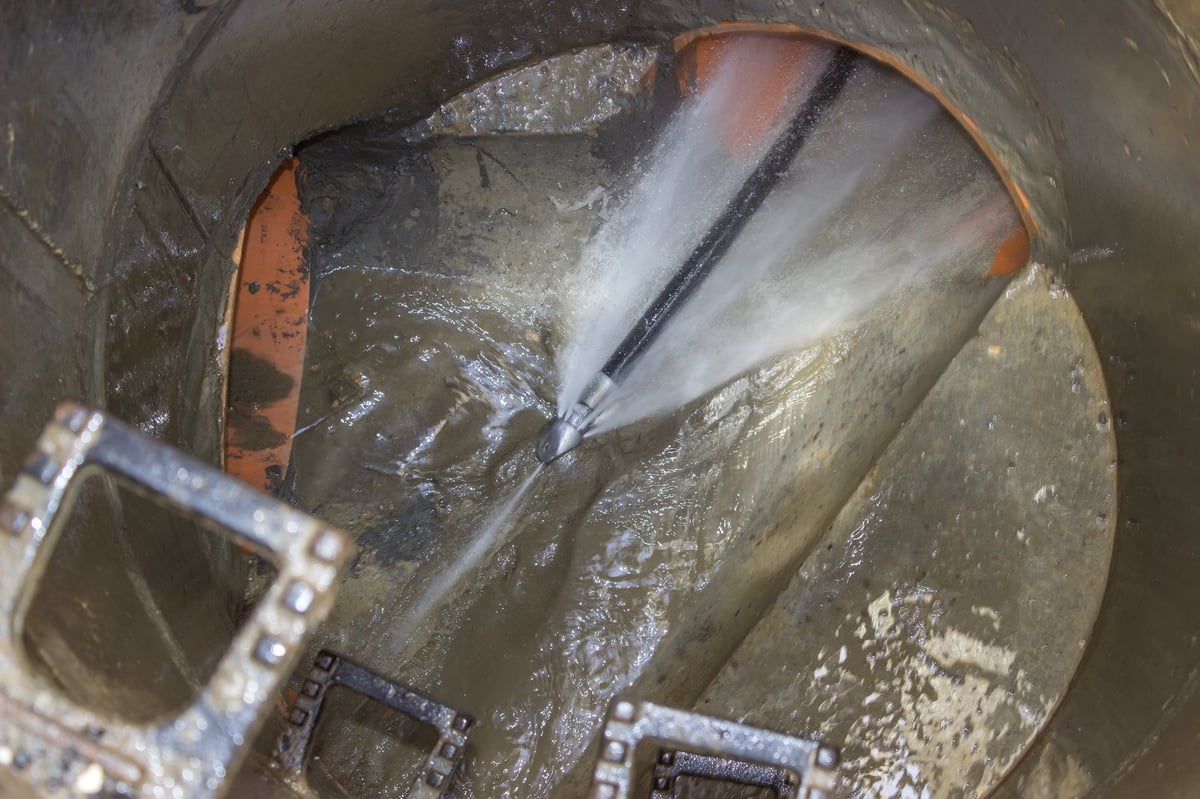
For external drains that run under a garden or a driveway, rodding is often the first choice. Manhole covers give access points, and from there an engineer can rod in both directions to clear a section. It is straightforward, low-risk, and does not require expensive equipment. That is why you will still see experienced drain engineers with a set of rods in their van, even if they also carry a jetting unit and a CCTV camera.
When Rodding Beats Jetting and Snaking
High pressure water jetting is brilliant for flushing out silt and grease from large diameter pipes. But it can sometimes push a blockage further down the line, especially if the pipe is partially collapsed or has a sharp bend. A CCTV drain survey will show you what is happening inside the pipe, but it will not remove the obstruction. That is where rodding comes in.
I remember a job in a residential street near Chelmsford in Essex. The homeowner had a toilet blockage that would not clear no matter how many times they plunged it. We arrived and checked the manhole covers in the front garden. The pipe was old salt-glazed stoneware, probably from the 1950s. Using a high pressure jetter on that would have risked blowing out the joints. Instead, we used professional drain rodding with a rubber plunger head. Within twenty minutes, we had dislodged a congealed mass of wipes and paper that had been sitting in a low section of the pipe. The toilet flushed freely again, and the pipe was undamaged.
That is the trade-off. Jetting is fast but aggressive. Snaking is good for roots but can scratch the pipe lining. Rodding is slower but gentle, and it gives you direct tactile feedback. For many routine blockages, especially in older drainage systems, it is the safest option.
Rodding Is Part of a Complete Drain Maintenance Plan
Regular drain cleaning is not just about reacting to emergencies. It is about preventing them. A+ Drainage Services, where I work, recommends a combined approach. For most residential and commercial properties, we suggest an annual drain maintenance visit that includes a CCTV drain survey to inspect the pipes, followed by high pressure water jetting to flush out any buildup, and professional drain rodding to clear any stubborn spots that the jetter cannot shift.
Rodding is especially useful for clearing root ingress, where tree roots have found a crack in a pipe and grown inside. A root cutter attachment on a rod can slice through those roots without damaging the pipe wall. Then the debris can be washed away with a jetter. Without rodding, you might have to dig up the entire section of pipe, which costs much more and takes days.
Another common scenario is a kitchen sink blockage in a commercial kitchen. Grease and food scraps build up over weeks, forming a thick sludge. A drain snake can punch a hole through it, but the sludge often reforms quickly. Rodding with a corkscrew attachment pulls the sludge out physically. Then we follow up with hot water jetting to clean the pipe walls. That combination gives a lasting result.
What to Look for in Professional Drain Rodding
Not all rodding is equal. A true professional drain rodding service uses high-quality rods that are stiff enough to push through long runs but flexible enough to navigate bends. Cheap rods from a DIY store are often too flimsy and snap under pressure. An experienced engineer also knows how to judge the force needed. Push too hard, and you could split a joint. Push too gently, and you will not clear the blockage.
We also use rods with markings every metre, so we know exactly how far into the pipe we have gone. That helps when we later do a CCTV drain survey to check the result. If the blockage was at six metres, we can verify that the pipe is clear at that distance.
One thing I always tell customers: do not try to rod a drain yourself unless you are sure the blockage is shallow and simple. It is easy to push a blockage deeper, or to get a rod stuck in the pipe. A professional engineer has the experience and the tools to do it safely. And with a service like A+ Drainage Services, there is no callout fee, so you are not paying extra just for the van to turn up.
The Place of Rodding in Modern Drainage
Some people assume that professional drain rodding is old-fashioned and has been replaced by cameras and jetters. That is a misunderstanding. Those tools are complementary. In fact, many modern drainage companies, including ours, always carry rods alongside the high-tech gear. When we do a CCTV drain survey and spot a partial blockage, the most efficient way to clear it is often to rod it there and then, rather than bringing in a separate jetting crew.
Rodding also excels in tight spots where larger equipment cannot reach. For example, a blocked drain running under a narrow alleyway or a conservatory. A jetting hose might not bend enough to get into the access point. But a set of drain rods, each section only a metre long, can be assembled piece by piece in the tightest space. That kind of adaptability keeps rodding relevant.
I have worked on drainage systems in London that are over a hundred years old. Brick-built sewers, clay pipes, cast iron stacks. Each material behaves differently. Rodding gives you the sensitivity to feel the condition of the pipe as you work. You can tell if the pipe is rough or corroded, if there is a crack, or if the blockage is solid or mushy. That information is invaluable for planning any subsequent drain repair work.
Practical Tips for Homeowners and Businesses
- If you have repeated blockages in the same drain, it might indicate a structural problem such as a collapsed pipe or root ingress. Ask for a CCTV drain survey before you spend money on repeated rodding.
- Rodding is excellent for clearing toilet blockages caused by excessive paper or wipes. But if the blockage is solid, like a plastic toy or a rag, you may need to remove the toilet and retrieve the object manually.
- For kitchen sink blockages, try using a plunger first. If that does not work, call a professional. DIY rodding with a cheap plastic snake can scratch stainless steel pipes.
- Always ensure the engineer uses the correct attachment. A rubber plunger head is for pushing, a corkscrew is for pulling, and a cutting head is for roots. Using the wrong one can make the problem worse.
Professional drain rodding is not a one-size-fits-all solution. But when applied correctly, it is one of the most reliable, cost-effective, and low-damage methods of drain unblocking available. It is a skill that takes years to develop, and it is a core part of what we do at A+ Drainage Services. Whether you are dealing with a slow-running kitchen sink or a completely blocked external drain, rodding is often the first tool we reach for. And it is a tool that, despite all the technological advances, still earns its place in the van every single day.